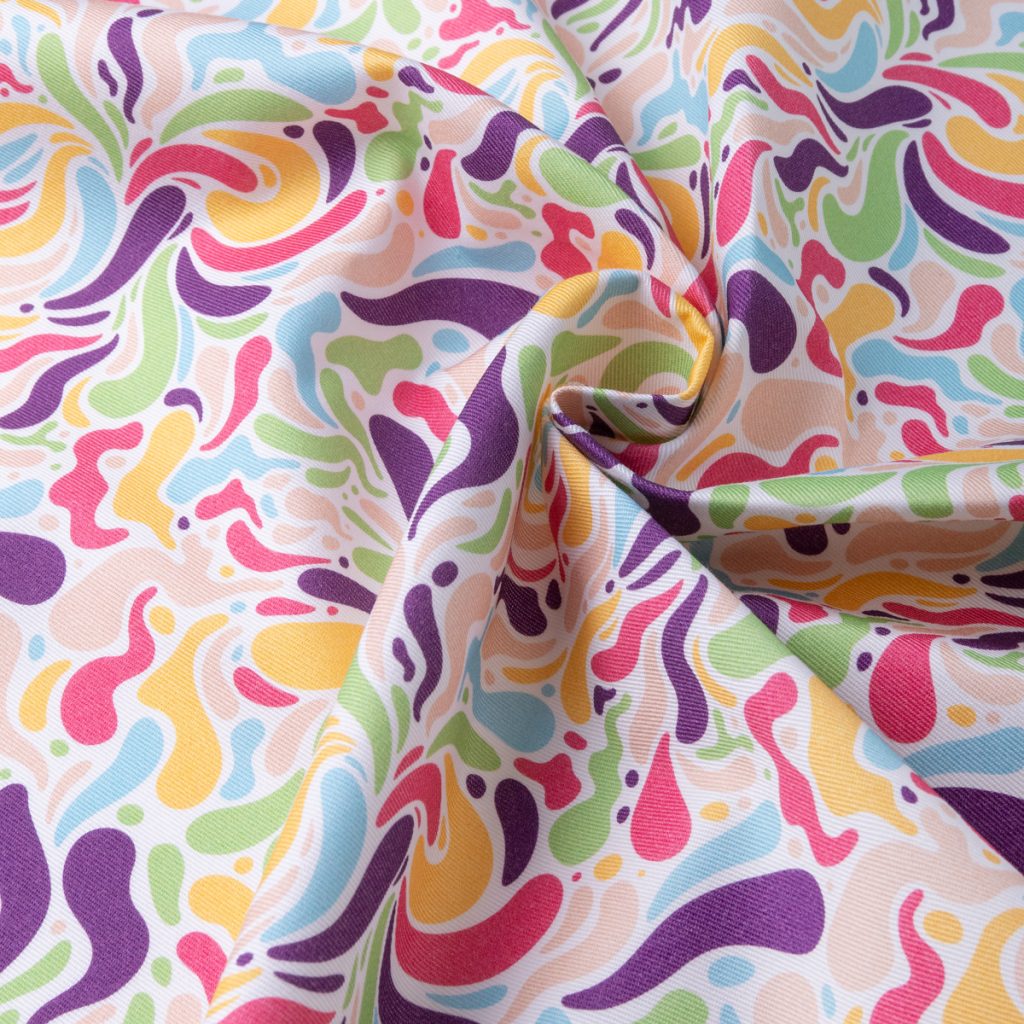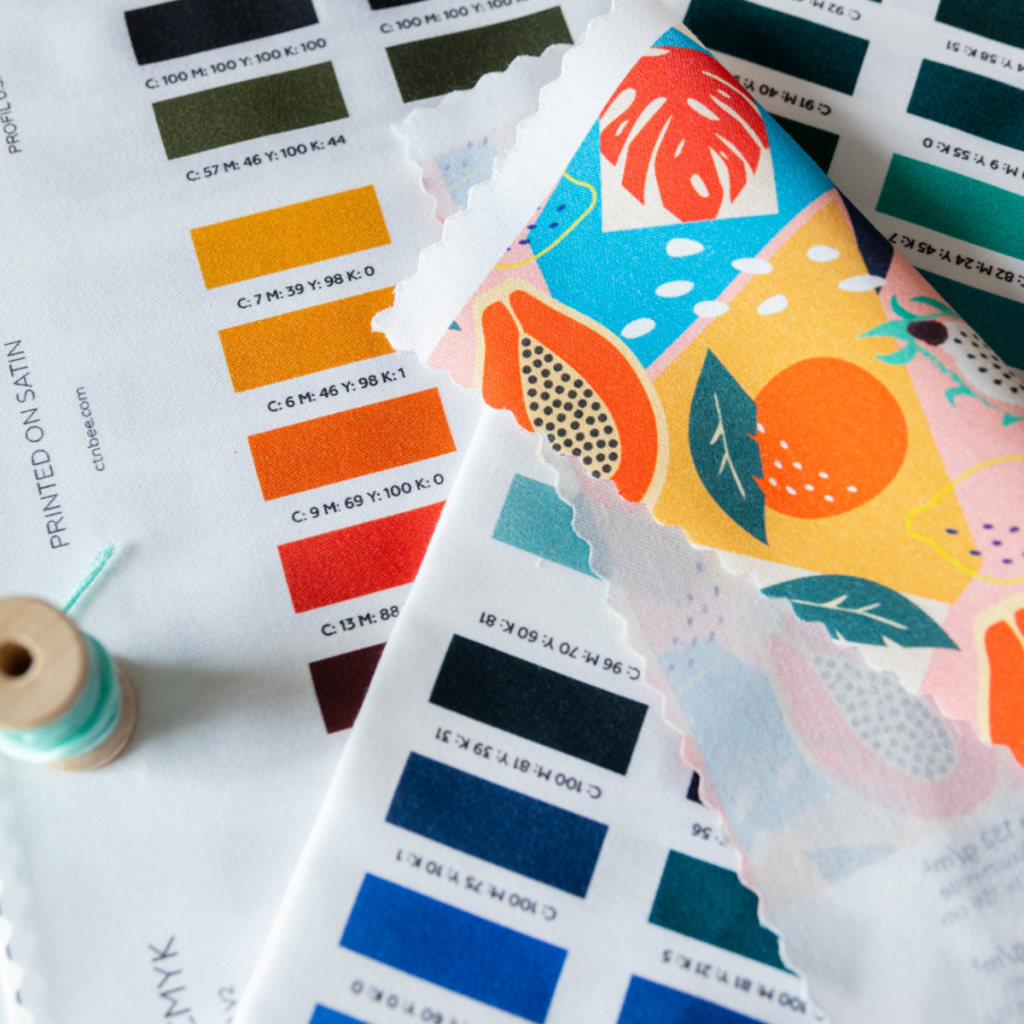
Colors in textile printing differ from the on-screen design because a monitor emits light, while fabric reflects it. Pigments cannot replicate the intensity and radiance of RGB colors. Furthermore, the printing technology and the type of fabric physically alter how we perceive color. Screen vs fabric: the fundamental difference you need to know Before we dive into technical specifications, it is essential to understand the fundamental physical difference between the digital world and reality. The issue isn’t with the equipment itself, but rather in the way our eyes perceive screen vs fabric color in these two distinct environments. The emissive model: Your monitor is like a lamp When you view a design on a smartphone, laptop, or TV screen, you are looking directly at a light source. Monitors operate using the RGB (Red, Green, Blue) model, where colors are created by mixing beams of light that travel directly to your retina. Because the screen “produces” its own light, the colors are: The subtractive model: Fabric is like a mirror Unlike a monitor, fabric does not emit its own light; it operates on…
Author: Adam Kaczorowski
I bridge the gap between printing technology and a passion for sewing. I analyze how different print methods perform on various fabrics to help you create stunning, long-lasting textile projects. My work is all about practical solutions, not just theory, ensuring every print looks great, even after many washes.
Cotton twill is one of the most popular and versatile fabrics, instantly recognizable by its characteristic diagonal weave. It is highly valued by DIY sewists for its exceptional durability, soft hand, and adaptability. Find out why this material is a…