Fabric Printing Prices: Why They Vary and How to Compare Quotes
The answer to question why do fabric printing prices vary usually does not lie in one price list. Instead, it lies in the whole production scenario. Fabric printing prices vary because quotes very often include a different material, a different process scope, and a different level of risk on the brand’s side.
Key takeaways
- fabric printing quotes rarely refer to exactly the same service — they differ in material, technology, process scope, and risk level;
- two quotes may look similar, but in practice they can mean completely different production scenarios;
- a low printing price does not always mean a lower total business cost;
- for a brand, the most important thing is not who offers the lowest rate, but which quote best fits the project goal.
Why do fabric printing prices vary? In short
The price of fabric printing varies because, in practice, brands rarely compare identical offers. Instead, they compare different service scopes. Pricing is affected by the material, the technology, the tests, the finishing, the logistics, and also whether we are talking about a prototype, a short run, or regular production.
The most common scenario looks like this. A brand receives two quotes for fabric printing. Sees a price difference, and tries to understand where this gap comes from. Intuitively, the brand assumes it is about the supplier’s margin. In practice, however, it is much more often about the service scope and the assumptions hidden behind the quote.
What has the biggest impact on cost?
The biggest differences in fabric printing prices usually come from several factors. In B2B, a quote is not only a question of how much the print itself costs. It is also a question of the risk of the first production run. Also the repeatability of future orders, and whether the material will perform well later on. For example in cutting, sewing, and in the finished product.
What determines the price of fabric printing? 6 main factors
| Factor | What may differ between quotes | What it changes for the brand |
|---|---|---|
| Base material | composition, weight, width, weave, certifications | affects the entry price, but also material use and product perception |
| Printing technology | method of applying the design, fixation, fibre compatibility | changes durability, the final effect, and the business value of the quote |
| Order scale | prototype, short run, regular restock | decides whether the quote is meant to validate an idea or to scale production |
| File preparation and testing | file, samples, colour test, use test | reduces the risk of mistakes, but is not always included in the same way |
| Post-print finishing | stabilisation, softening, fixation, quality control | affects sewing, use, and complaint risk |
| Logistics and waste | packing, transport, reserves, waste | shows whether the quote is complete and comparable |
1. Base material: impact on the printing price
The first thing you need to check is not the printing price itself, but what the print will be produced on. Two quotes may refer to a design that looks similar on screen, but not to the same material.
Light utility fabrics, common synthetics, or simple blends are more likely to bring the quote closer to the lower end. More specialised materials, heavier knits, fabrics with a specific hand feel, premium bases, or certified materials are often priced higher.
What this changes for the brand
For a brand, the choice of printing technology in a production quote is not a technical detail. The material has a huge impact on how the product will drape, sew, look after printing, and how it will be perceived by the end customer.
If you want to explore this topic further, check our guide on what to consider when choosing fabrics.
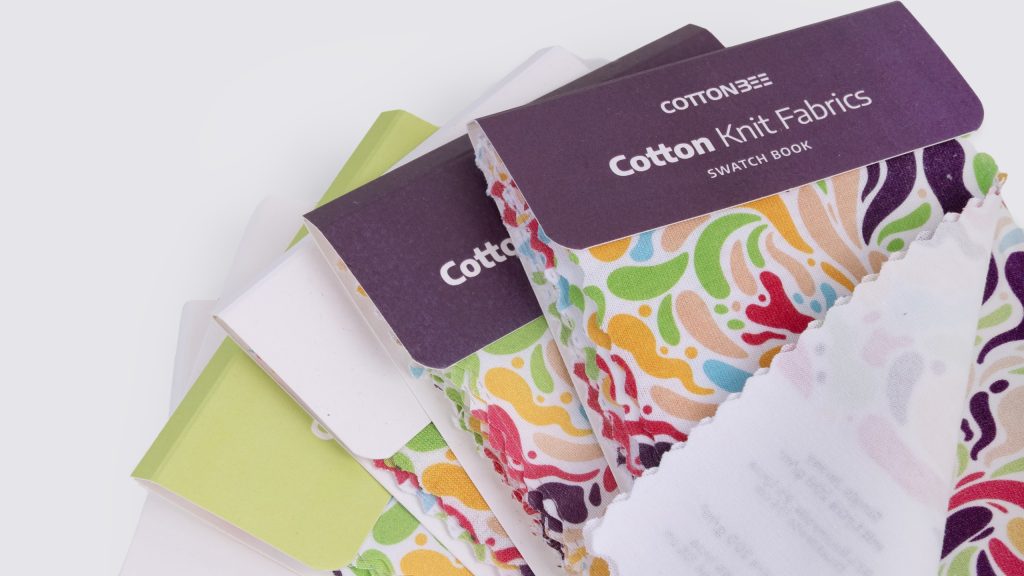
What to check before comparing quotes:
Before you compare two quotes, make sure that you are comparing:
- the same type of material,
- a similar weight and width,
- a similar hand feel and product purpose,
- the same level of quality requirements.
2. Fabric printing price vs technology
This is one of the most overlooked reasons why fabric printing prices vary.
Technology affects the cost of fabric printing. It changes not only the print itself, but also the number of process steps and the repeatability of the result. Natural fibre, synthetic fibre, a matte effect, a soft hand feel, high durability, or a quick collection test — each of these assumptions can push the quote in a different direction.
What this changes for the brand
If a brand compares two quotes without checking which technology stands behind the price and what the process includes, it becomes very easy to choose an offer that looks attractive at the start, but proves weaker later on.
A more expensive process may be justified when it reduces the risk of complaints, improves the hand feel, makes sewing easier, or gives better repeatability between runs. That is exactly why the phrase “cheaper printing” can be misleading.
So, if you compare offers, look not only at the print rate itself, but also at what is included in the price: base preparation, fixation, stabilisation, and quality control.
Learn more about printing technologies.
3. Order scale: prototype vs restock
A lot of misunderstandings come from the fact that one quote concerns a test and the other concerns regular production. Formally, both may concern fabric printing, but from a business perspective they answer two different goals.
A prototype is meant to help validate an idea quickly and reduce the risk of the first decision. A short run is meant to provide flexibility. Regular production is meant to be predictable, repeatable, and operationally convenient.
What this changes for the brand
This changes the way the price should be read. With regular orders, repeatability, logistics, and predictability between batches become more important. This is exactly where brands often make a wrong comparison of fabric printing prices. A brand compares a quote for a test with a quote for production and concludes that “the same service” costs differently. In practice, these are simply two different cooperation models.
In regular production, the unit cost is often lower than in tests or short runs. However, this does not result only from a “lower printing price”, but from better predictability, process optimisation, and spreading the costs across a larger volume.
Mini-scenario: why the cheaper offer is not always better
A brand receives two quotes for the same design. The first looks better in terms of price. The second is higher, but it includes a test, more stable finishing, and a more predictable base.
At first, the cheaper offer seems like the obvious choice. The problem appears later, when the material performs worse in sewing, requires more caution in cutting, or does not provide the expected repeatability in the next order. It is in situations like this that you can clearly see that the brand was not comparing two prices, but two levels of risk. And that is the most important difference.
4. File preparation and testing
In B2B, many problems begin not at the printing stage itself, but earlier: with the file, the design scale, the colours, and the lack of testing. This is also part of the quote, even though it is often invisible at first glance. In reality, it is often the element that explains why one quote is higher, but also safer.
What this changes for the brand
If one offer includes a verification stage and the other shifts more responsibility to the brand, then these offers are not equivalent. Buying samples or running a use test is one of the cheapest ways to avoid a wrong production decision.
For companies, this is especially important with the first order. In practice, the fear of a failed first production run is often a bigger barrier than the price itself. Therefore, a reliable quote should include the verification stage.
5. Post-print finishing: the factor that often decides the real cost
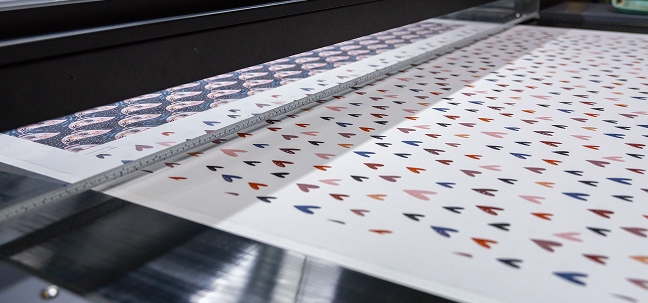
If you are wondering why fabric printing can be expensive, the answer often lies here. After printing, the material may require further steps that affect the hand feel, stability, shrinkage, and comfort of further production.
Finishing can improve the perception of the final material, but it also increases the cost. The problem is that skipping this stage, or lowering its quality, often comes back later in the form of hidden losses.
What this changes for the brand
For a brand, this means one thing: two similarly priced offers can lead to two completely different experiences in later production.
If the material drapes worse after printing, shifts more after washing, or requires additional work on the sewing side, the brand pays for it later in a different way. Sometimes through corrections, sometimes through waste, and sometimes — unfortunately — through complaints. This logic can be clearly seen, for example, in the cotton fabric printing cost calculation.
6. Logistics, waste, and the way cost is calculated
This is the last of the six factors, and at the same time one of the most important from a margin perspective. Production cost must include transport, packing, and technical reserve. In addition, there are cutting losses and the number of designs within one order. Only then can you see what the product really costs.
What this changes for the brand
This is often the point where it becomes clear whether the quote is complete. One quote may look simpler and cheaper only because it does not include the same organisational scope as the other.
Therefore, when comparing quotes, you need to look not only at how much the print costs, but also at whether both quotes include a similar fulfilment scenario.
How to compare fabric printing prices properly
If you want to compare printing offers fairly, do not ask only about the price. Compare the whole scenario.
Quote comparison checklist
Before you choose a supplier, check:
- whether both quotes concern the same material, or materials with a genuinely similar function;
- whether they are based on comparable technologies and a similar process scope;
- whether tests, samples, and file verification are treated in the same way in both cases;
- whether you are comparing a quote for a test, a short run, or regular production;
- whether both quotes include finishing, logistics, and risk on the brand’s side in a similar way.
Thanks to this, you will understand why the same fabric printing service costs differently depending on the supplier. Also check what to look for when choosing a digital textile printing company.
What to prepare before asking for a quote
A reliable quote starts with clear assumptions. The fewer gaps there are at the start, the easier it is later to compare quotes and understand why fabric printing prices vary.
Therefore, before sending an inquiry, it is worth preparing a short and structured brief that defines:
- the final product and its use,
- the type of material or the expected effect,
- the approximate meterage and number of designs,
- whether this is for a test, a short run, or regular production,
- requirements regarding hand feel, durability, finishing, and delivery.
Based on this, it becomes much easier to see which quote really fits your project and on what assumptions it was prepared.
Do you already have this information? Then you can send your brief right away and compare the quote based on one consistent production scenario.
Summary: why do fabric printing prices vary?
Fabric printing prices vary because quotes are very rarely 100% identical. One may be prepared for a faster start. Another for greater stability, and a third for a lower entry cost, but with more responsibility on the brand’s side.
That is why, in B2B, the safest decision is not about finding the lowest number. It is about checking what exactly that number means and whether it really matches your brand’s needs at this stage.
Not necessarily. Very often, it simply means a different service scope, a different material, or a different level of process security.
Most often, it is the material, the technology, the tests, the finishing, and whether the quote concerns a test or regular production.
No. The price per metre can be useful, but on its own it is almost never enough for a reliable comparison.
Check whether both quotes concern the same material, a similar process, and the same business goal. Without that, you are comparing two different scenarios rather than two equivalent offers.
Yes, if it fits the project stage better, reduces the risk of mistakes, and gives greater predictability for later production.
Most often, when you are checking a new material, a new design, or working with a supplier for the first time. For many brands, this is the safest way to start production.